






Introduction
1.1. Setting the Context: What Is a Night Vigil?
A night vigil in the funeral context refers to the act of keeping watch over a loved one before their final rites. It is a quiet, reflective period where family members and friends gather to honour the life of the departed, offering prayers, sharing memories, or simply sitting together in respectful silence.
Throughout history, the night vigil has held a deeply spiritual and communal meaning. Across different cultures and faiths, this practice represents the enduring bond between the living and the departed. Whether held in a home, a place of worship, or a funeral parlour, the act of keeping watch has long symbolised love, protection, and respect for the deceased.
Its significance goes beyond ritual. For many, it brings comfort to families, allowing them to remain close to their loved one while finding reassurance in the presence of others who grieve alongside them. This collective experience helps the bereaved process their loss, offering moments of reflection and closure.
In today’s world, families continue to seek ways to make their night vigil both meaningful and personal. While rooted in tradition, modern practices often blend cultural customs with individual touches that reflect the character and wishes of the deceased. It is this balance between tradition and personalisation that allows families to honour their loved ones in a way that feels both heartfelt and authentic.
Key Takeaways
- Night vigils allow families to come together before the funeral to reflect, remember, and express love in a peaceful and comforting environment.
- These gatherings provide emotional support and help families cope with grief through the guidance and care of funeral services that understand their needs.
- Each faith and culture observes vigils differently, yet the essence remains the same, honouring the departed with compassion, unity, and respect.
- By working closely with funeral service providers, families can plan meaningful vigils that balance personal wishes with cultural and spiritual traditions.
Part 2: The Deeper Significance of Night Vigils
2.1. Historical and Religious Roots
The night vigil is an ancient practice that spans generations and faiths. In earlier times, families would keep watch over the body of a loved one, believing that their presence safeguarded the soul and honoured the journey between life and death. This symbolism of keeping watch remains a profound expression of love and respect.
Among the various faiths observed in Singapore, vigils at Christian funeral services have often taken the form of a wake where relatives and friends gather to pray, sing hymns, and recite the rosary. This tradition reflects deep faith and the belief in eternal life after death.
Within Catholic funeral services, families may include rosary prayers and candlelight rituals to guide the departed soul with grace and peace. The gentle glow of candles symbolises the light of faith that continues beyond earthly life.
Similarly, Buddhist funeral services feature the chanting of sutras, which is believed to accumulate merit and help the spirit transition peacefully to the next realm. Likewise, during Taoist funeral services in Singapore, the ceremony is marked by Daoshi chants, ritual percussion, and symbolic items such as talismans or offerings that protect and bless the soul’s journey. Muslim families recite Qur’anic verses with dignity and restraint, focusing on prayer and remembrance rather than elaborate displays, while Hindu vigils emphasise devotion through bhajans and mantras, often accompanied by veena or tabla music, which remind participants of the cyclical nature of life and death.
For families who identify with a free-thinker funeral, the focus can be deeply personal. Families may choose storytelling, poetry readings, reflective silence, or meaningful music that honours the individual’s life journey. Despite the variations in practice in Singapore, the unifying essence remains the same: love expressed through presence.
2.2. Emotional and Spiritual Dimensions
Beyond religious observances, a night vigil provides profound emotional comfort for the bereaved. Coming together to keep watch creates a sense of shared purpose, offering emotional support during funerals when feelings of loss are most intense. It helps families cope with the initial shock and provides a calm environment to grieve collectively rather than in isolation.
The night vigil also has psychological importance. It allows family members and friends to process grief through gentle rituals, prayers, or conversation. The act of staying close to the deceased reinforces the role of family in the grieving process, strengthening connections and offering quiet moments for reflection. Many find that this shared experience helps release sorrow and bring emotional healing.
Spiritually, keeping watch affirms the belief that the departed soul should never be left alone. Whether through prayer, meditation, or the symbolism alone, loved ones believe their presence offers reassurance to the spirit on its journey. These moments, marked by remembrance, silence, or soft music, allow generations to connect through grief and love, transforming sorrow into understanding and legacy.
Recognising the night vigil as both a sacred duty and a source of comfort helps families embrace it as a meaningful farewell.
2.3. Practical Elements of Night Vigils
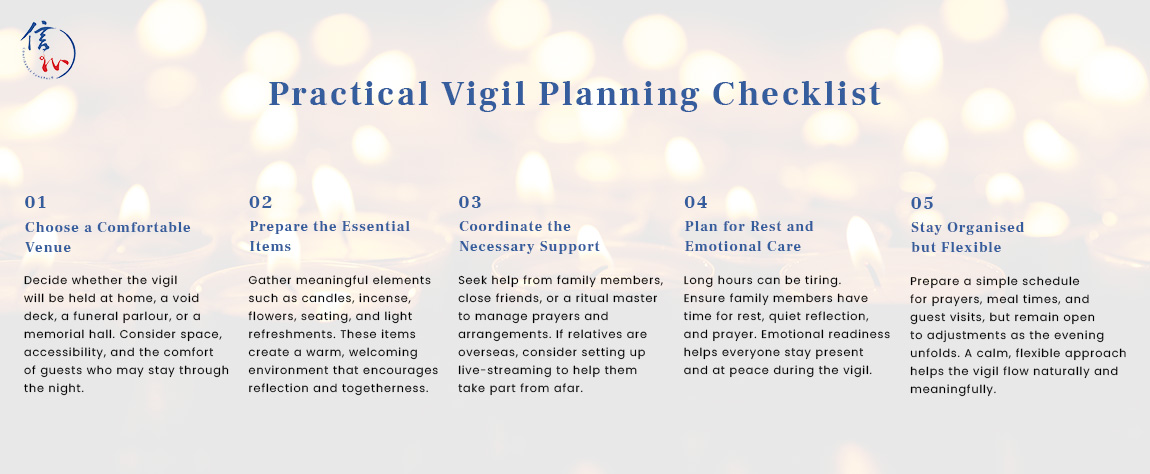
While rich in spiritual meaning, a night vigil also involves many practical considerations. Common elements include candles, incense, flowers, and personal mementos that reflect the deceased’s personality and beliefs. Simple refreshments are often prepared for guests, symbolising hospitality and gratitude for their presence. Some families may also include religious chanting and prayers, filling the space with calm and reverence while offering spiritual comfort to everyone present.
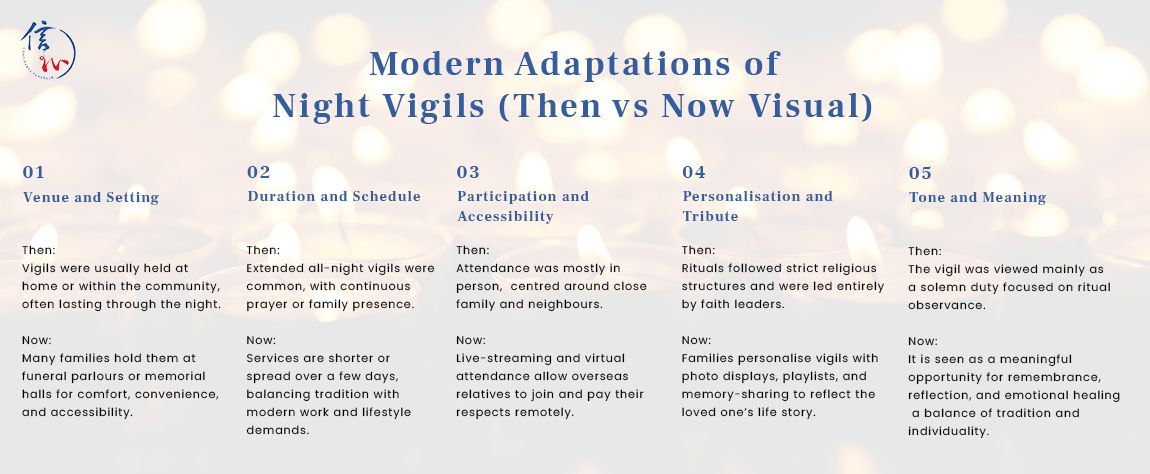
In Singapore, night vigils may take place at HDB void decks, funeral parlours, or memorial halls, depending on family preferences. Some opt for shorter sessions, while others choose extended overnight vigils. With technology, families can even hold live-streamed or virtual vigils to include relatives who are overseas, ensuring that distance does not hinder participation.
Thoughtful touches—comfortable seating, refreshments, and calm music—create a warm and supportive atmosphere during a difficult time. At the same time, families must also manage rest and fatigue, especially during extended overnight vigils, to ensure everyone remains physically and emotionally present throughout the ceremony.
When families approach the night vigil with intention and care, it becomes more than a ritual. It becomes a source of healing that helps them navigate loss with grace, mindfulness, and unity. Those who take part often describe the experience as one that deepens understanding, strengthens relationships, and provides collective peace.
Part 3: Night Vigils in Today’s World
3.1. Navigating Multi-Faith and Multicultural Settings
Singapore provides a unique setting where people of many beliefs and traditions coexist. In such a diverse society, the night vigil has evolved into a reflection of this multicultural harmony. Families often blend practices drawn from different faiths to create ceremonies that honour their loved one’s spiritual identity while respecting the beliefs of relatives and friends. This blending of mourning rituals and traditions has become a quiet symbol of unity and understanding in a modern city shaped by cultural diversity.
Respecting these differences is essential when planning a night vigil. Whether it is the use of incense, the timing of prayers, or the display of symbols, each faith has its own customs. When vigils take place in shared spaces such as funeral parlours or HDB void decks, careful coordination ensures that rituals do not clash or unintentionally cause discomfort to others. At the same time, there are universal threads that connect all religions—light, love, remembrance, and presence. These shared values remind families that the essence of a vigil lies in compassion and togetherness rather than strict formalities.
In such multicultural settings, it can be easy to overlook certain etiquettes or cultural nuances without proper guidance. Families who are unfamiliar with these differences may worry about unintentionally offending guests or performing rites incorrectly. Education, openness, and sensitivity help build confidence in managing cross-cultural vigils. When families approach the process with respect and curiosity, the night vigil becomes a space where understanding and harmony take root.
3.2. Creating a Meaningful Vigil for Your Loved One
A vigil offers families the opportunity to craft a deeply personal and comforting experience. Before planning begins, it is important to reflect on a few key questions: What were the wishes of the deceased, if they were expressed? What cultural or spiritual values are most meaningful to your family? How do you want guests to participate? Taking time to answer these questions helps ensure the gathering feels sincere and aligned with the values of both the family and the departed.
In Singapore, more families are choosing personalised vigils that reflect their loved ones’ lives and individuality. Some create music playlists that reflect the loved one’s personality, while others set up memory boards or photo displays that capture special moments from their life. Simple touches, such as lighting candles, displaying favourite flowers, or including symbolic rituals, can transform the space into a warm, reflective environment. These elements give visitors a way to connect meaningfully with the memory of the deceased.
This occasion can also be an opportunity to involve the younger generation. Inviting children or grandchildren to help with simple tasks such as arranging flowers or sharing stories teaches them about family values, remembrance, and empathy. This gentle participation helps them understand that grief and love can coexist, turning the ceremony into a shared experience of healing and unity.
Ultimately, a well-planned vigil, no matter how simple, becomes a comforting reminder of togetherness and the enduring bonds that remain after loss.
3.3. The Role of Funeral Service Providers
Behind every well-organised night vigil is a team of professionals who guide families through the process with compassion and care. A 2022 study published in ScienceDirect highlights that funeral directors play a vital role in supporting families through the early stages of grief.
Experienced directors and ritual masters ensure that proceedings run smoothly, coordinating with religious representatives and family members to maintain both order and meaning. Their guidance is invaluable, especially when families must navigate complex or multi-faith customs.
Funeral service providers also play an essential supportive role by handling the logistics involved in the event. They oversee the setup of the venue, arrange food and seating for guests, adjust lighting, and even coordinate live-streaming services for relatives abroad. Their support allows families to focus on being present rather than worrying about technicalities or arrangements.
In a fast-paced society, balance is key. Funeral professionals help families honour tradition while accommodating modern needs such as limited time, space, and comfort. Whether through flexible schedules or thoughtful arrangements, their assistance makes the experience less stressful and more meaningful. Funeral providers such as Confidence Funeral Services Pte Ltd offer this balance through dedicated care, cultural sensitivity, and seamless organisation, ensuring that every farewell is carried out with dignity, grace, and deep respect.
Conclusion

A night vigil is more than a funeral ritual; it is a heartfelt expression of love, memory, and unity. Across different beliefs and traditions, the essence remains the same as families gather to keep watch, offer comfort, and pay tribute to a cherished life. Whether through prayers, quiet reflection, or the sharing of stories, each vigil becomes a space where love and presence take form.
In today’s world, families continue to blend age-old customs with personal touches, showing that even as traditions evolve, the meaning of this timeless practice remains universal: a space of peace, remembrance, and enduring compassion.
If you are planning a vigil and need gentle guidance, reach out to Confidence Funeral Services Pte Ltd. today. Our caring team will help you arrange a farewell that honours your loved one with dignity, comfort, and respect for every tradition.
Questions You Might Ask
1. What is the purpose of a vigil?
A vigil allows family and friends to keep watch over their loved one before the funeral. It provides emotional comfort, honours cultural or religious traditions, and symbolises that the deceased is never left alone on their final journey. Many also view it as an opportunity for reflection, prayer, and togetherness, offering a sense of closure before the farewell rites begin.
2. How long does a vigil usually last?
The duration of a vigil varies depending on culture, religion, and family preferences. Some gatherings last overnight until the funeral day, while others may span several nights, especially in traditions where extended mourning rites are observed. In Singapore, most families hold services for one to three days, allowing time for relatives and friends to visit and pay their final respects.
3. Do all religions practise vigils?
Not all religions require vigils, but many have similar traditions. Catholics hold wakes with prayers, Buddhists and Taoists include chanting rituals, Muslims recite Qur’anic verses, Hindus use mantras and bhajans, while Free-thinkers may opt for reflective storytelling or music. Although the forms differ, the intent of honouring the departed and offering emotional support to the bereaved remains consistent across faiths.
4. Can vigils be customised for non-religious families?
Yes. Non-religious families often personalise their gatherings with photo displays, memory sharing, meaningful music, or quiet reflection, focusing on reflection rather than formal rituals.
5. How can Confidence Funeral support families with vigils?
Confidence Funeral Services Pte Ltd provides guidance on cultural and religious etiquette, arranges logistics such as seating, lighting, and refreshments, and offers compassionate assistance throughout the process. Their experienced team ensures that every detail of the service is handled with care and dignity. This allows families to focus fully on grieving, remembrance, and spending meaningful time with loved ones during a deeply emotional period.